Tel
+86-13617990808Electricity is like a fleet of speeding cars rushing along the highways, which are power lines. However, electricity is a mischievous passenger, always attempting to 'jump out of the car' (leakage or short-circuit). This is where insulators come into play.
Insulators act like traffic police and guardrails on the power highway—keeping power lines in place and preventing electrical accidents, just like how barriers protect cars from veering off the road.
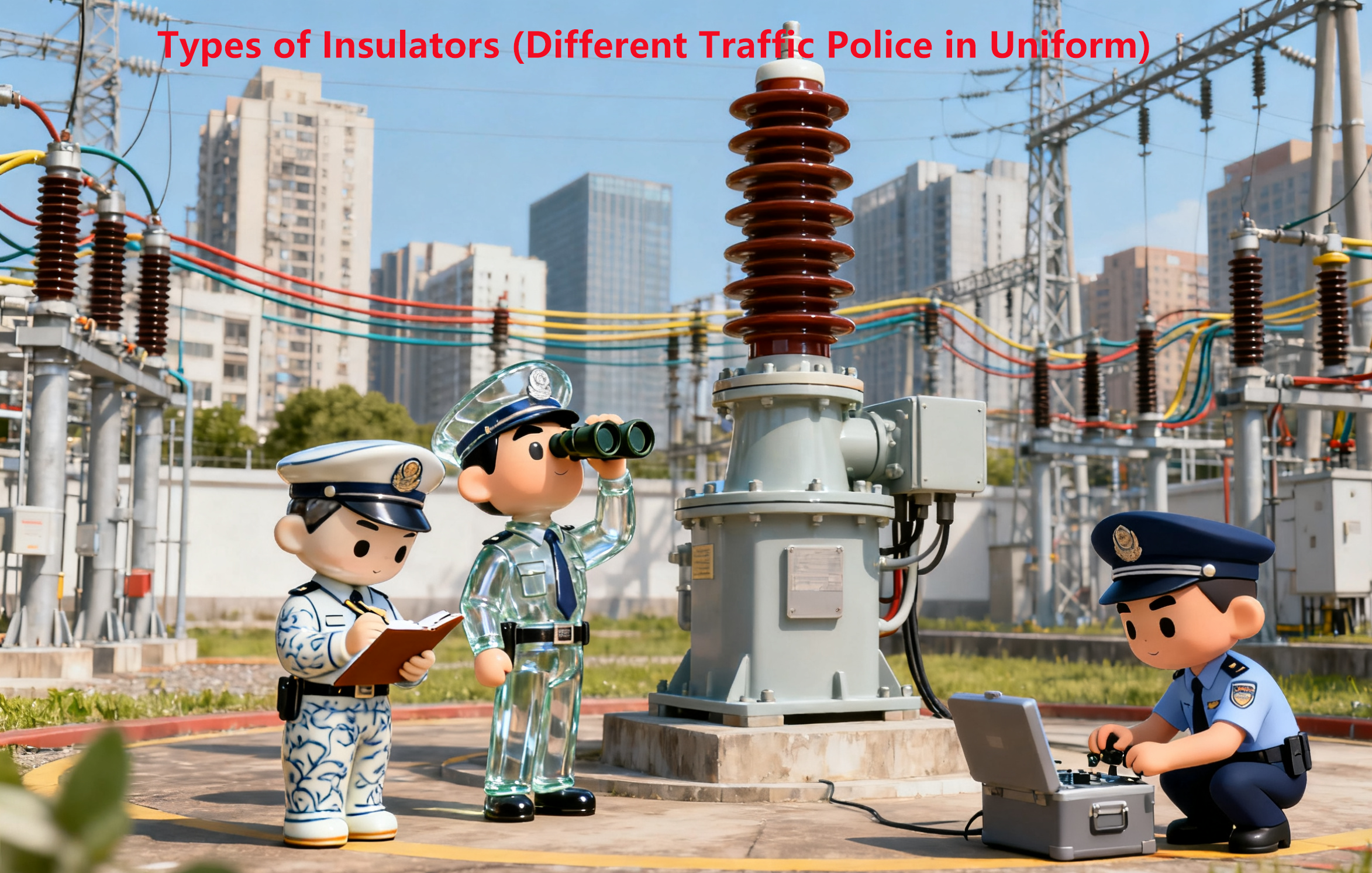
There are three main types of insulators, each with a unique role in ensuring the safe delivery of electricity. Let's introduce the 'traffic officers' who control the flow of electricity on power lines:
Appearance: Brown ceramic body, traditional, solid.
Features:
Tough and durable.
Heat-resistant and cost-effective.
However, they are heavy and can be brittle under impact.
Common Use:
Often seen on rural power lines, substations, and basic utility applications.
Scene: Donut-shaped brown discs stacked on village power poles.
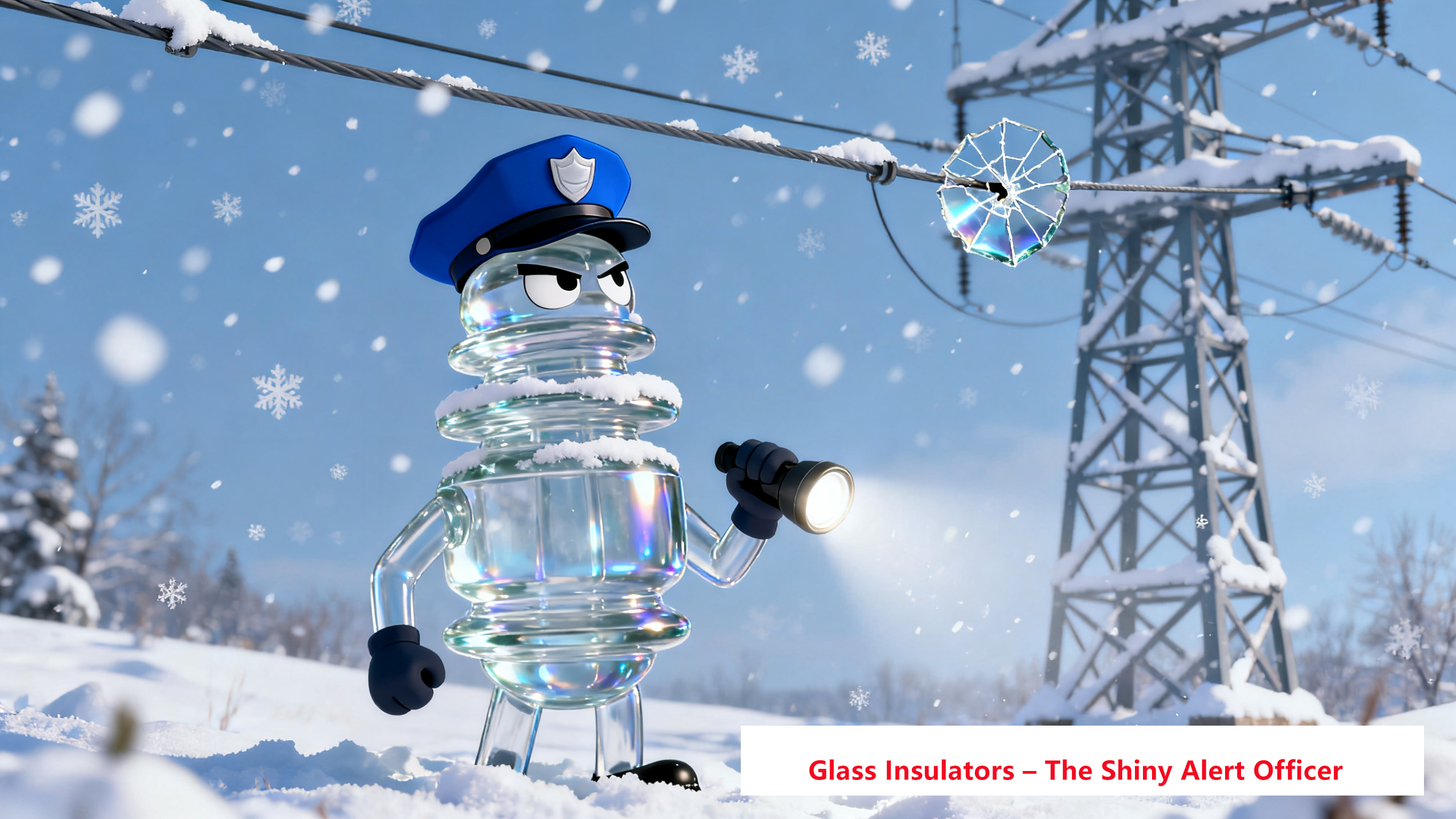
Appearance: Transparent and sparkling, with a crystal-like finish.
Features:
Excellent electrical performance.
Self-alarming: Shatters visibly when damaged, like a self-check system.
Fragile when hit, but highly reliable when intact.
Common Use:
High-voltage transmission towers and urban power grids.
Scene: Bead-like glass discs glowing on tall pylons.
Appearance: Silicone rubber coat over a fiberglass rod, sleek and modern.
Features:
Lightweight and designed for extreme environments.
Pollution-resistant and weatherproof, ideal for coastal and desert areas.
Corrosion-resistant, perfect for wind farms and harsh weather zones.
Common Use:
Used in extreme conditions, such as coastal areas, deserts, or industrial zones.
Scene: Black 'rocket tail' shapes hanging on modern towers.
Just like highways, the power transmission network has speed limits (voltage levels) that determine the type of insulator required.
| Voltage Level | Road Type | Application | Insulator Shape / Example |
|---|---|---|---|
| Low (<10kV) | Neighborhood Road | Homes, local networks | Short and fat (e.g., FXBW-10/70) |
| High (110–220kV) | City Overpass | Factories, transit systems | Medium-length strings (e.g., PS-30/15) |
| Extra High (330–750kV) | Intercity Highway | Regional transmission | Long glass/composite strings (e.g., QH-500/160) |
| Ultra High (1000kV+) | Maglev Railway | Cross-country power delivery | Giant tower-like units (e.g., ZSW-1000/280) |
⚡ The higher the voltage, the stronger the 'traffic police' (insulators) need to be.
Alternating Current (AC) and Direct Current (DC) are like different traffic directions. Let's see how insulators manage these currents:
AC (Alternating Current):
Functions like a two-way street, with electricity flowing back and forth.
Common in household outlets and urban grids.
Insulators must endure repeated electrical stress in both directions.
DC (Direct Current):
Functions like a one-way express lane, with electricity flowing in one direction.
Used for long-distance transmission and solar energy systems.
Requires insulators with high pollution resistance, as static DC attracts more dust and causes corona discharge.
Insulator model numbers are like 'ID badges' for the hardworking officers of the electrical world. Take FXBW-10/70 as an example:
| Code | Meaning |
|---|---|
| F | Suspension type (flexible mounting) |
| X | Composite material |
| B | Anti-pollution design |
| W | Mechanical bending strength |
| 10 | Rated voltage (10kV) |
| 70 | Tensile strength (70kN) |
Choosing the right insulator is like assigning the right officer to a section of the highway. Here’s a guide:
| Environment | Recommended Insulator | Reason |
|---|---|---|
| Dusty/Coastal/Industrial | Composite insulator | Corrosion-resistant, pollution-resistant |
| Cold/Snowy Areas | Glass insulator | Easy visual inspection, self-shattering alarm |
| Budget-conscious Areas | Porcelain insulator | Cost-effective, reliable |
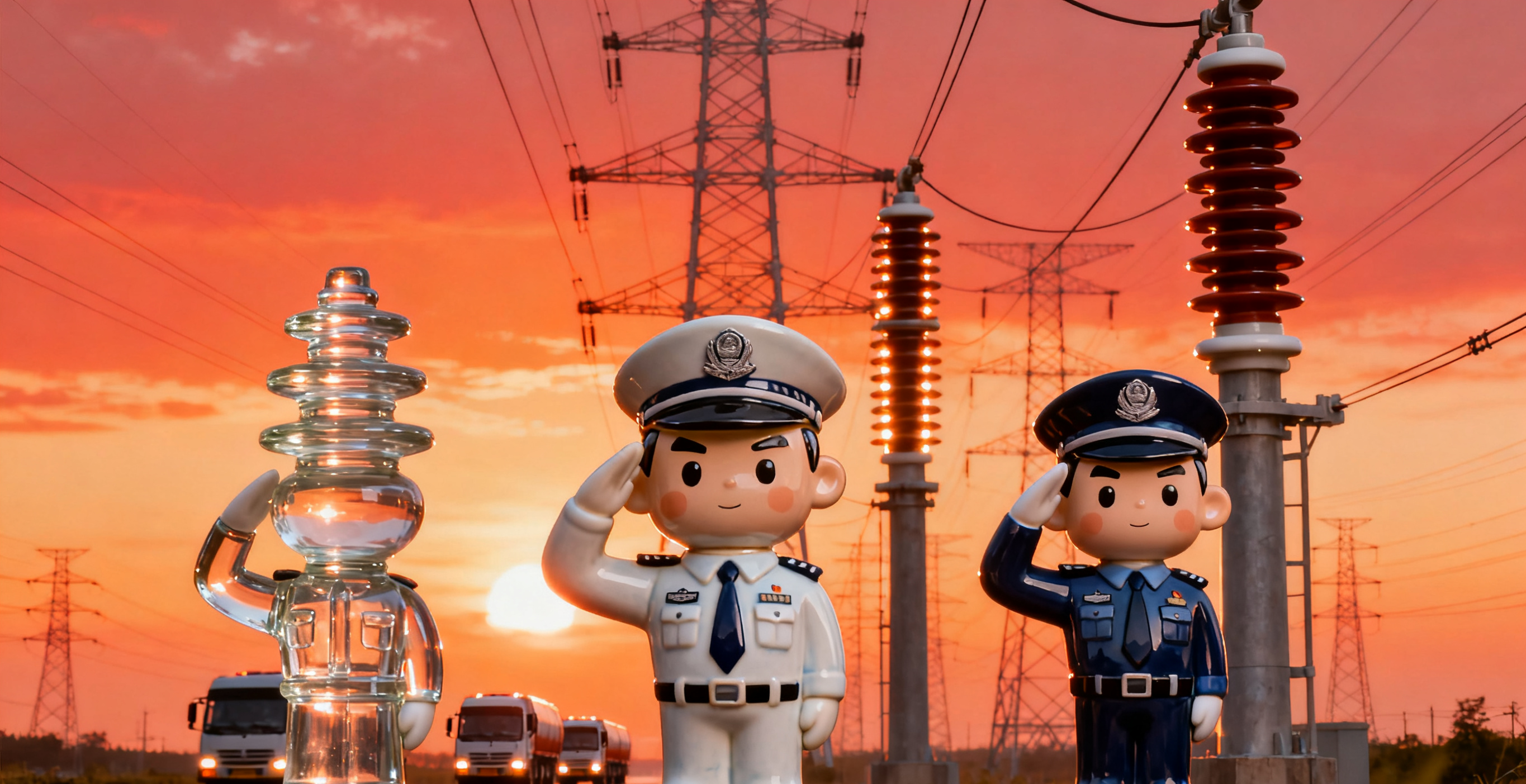
Insulators are not just mechanical components—they are guardians of safe electricity delivery. The next time you look up and see the donut rings or glass beads on power lines, remember:
They are silently working to keep the lights on, machines running, and your city glowing.
Hotline